Highlighted Publications
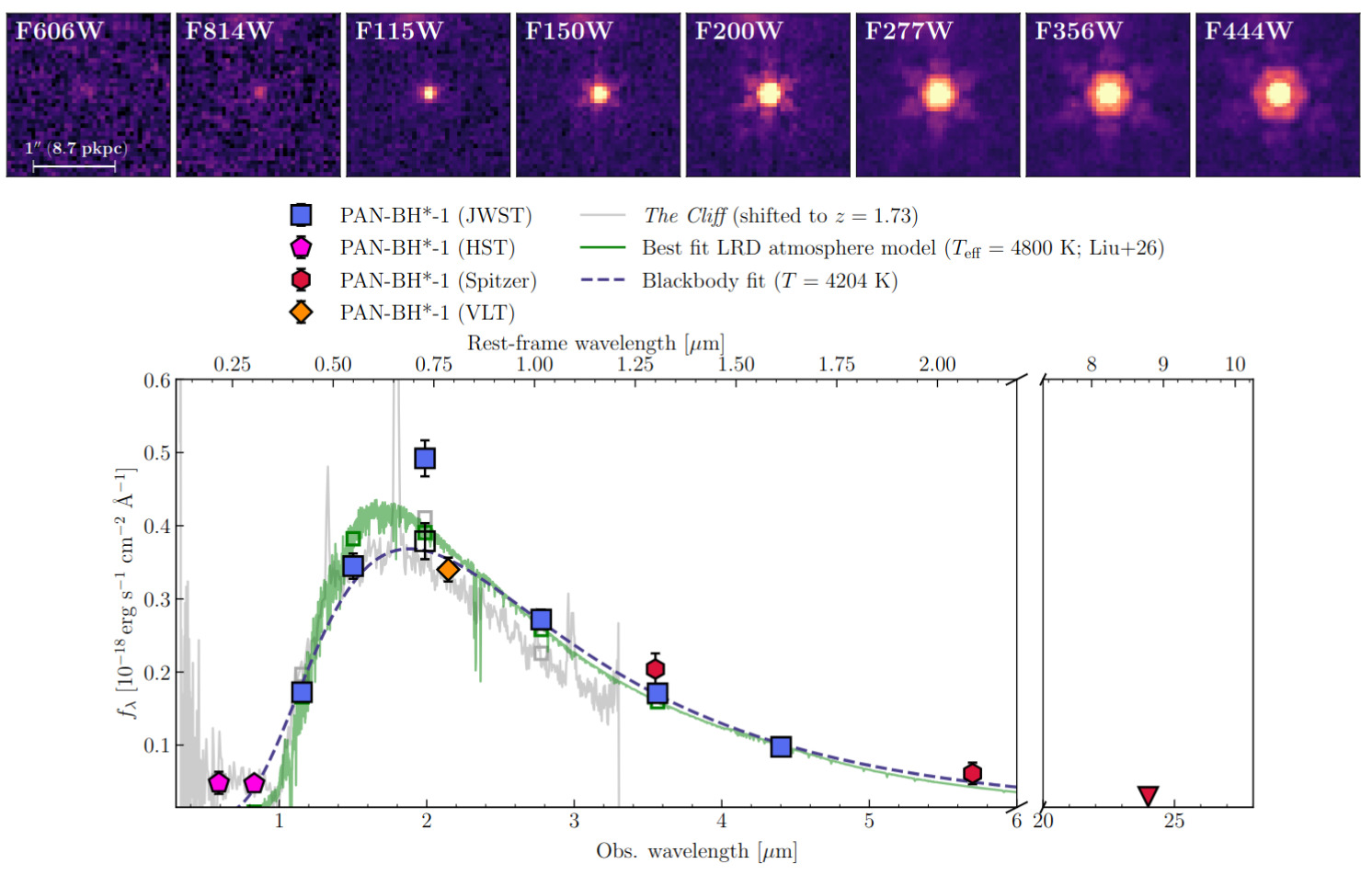
A Black Hole Star at Cosmic Noon: Extreme Balmer break, photospheric continuum, and broad absorption by thick winds in a Little Red Dot at z=1.7
We presented a newly discovered Little Red Dot with an extreme Balmer break, comparable to the strongest found so far, at a redshift of z=1.731. We confirmed the redshift via VLT/X-Shooter spectroscopy of the H-alpha line. I had the amazing opportunity to carry out these observations at Paranal (Chile) in person, and this paper was the result of that.
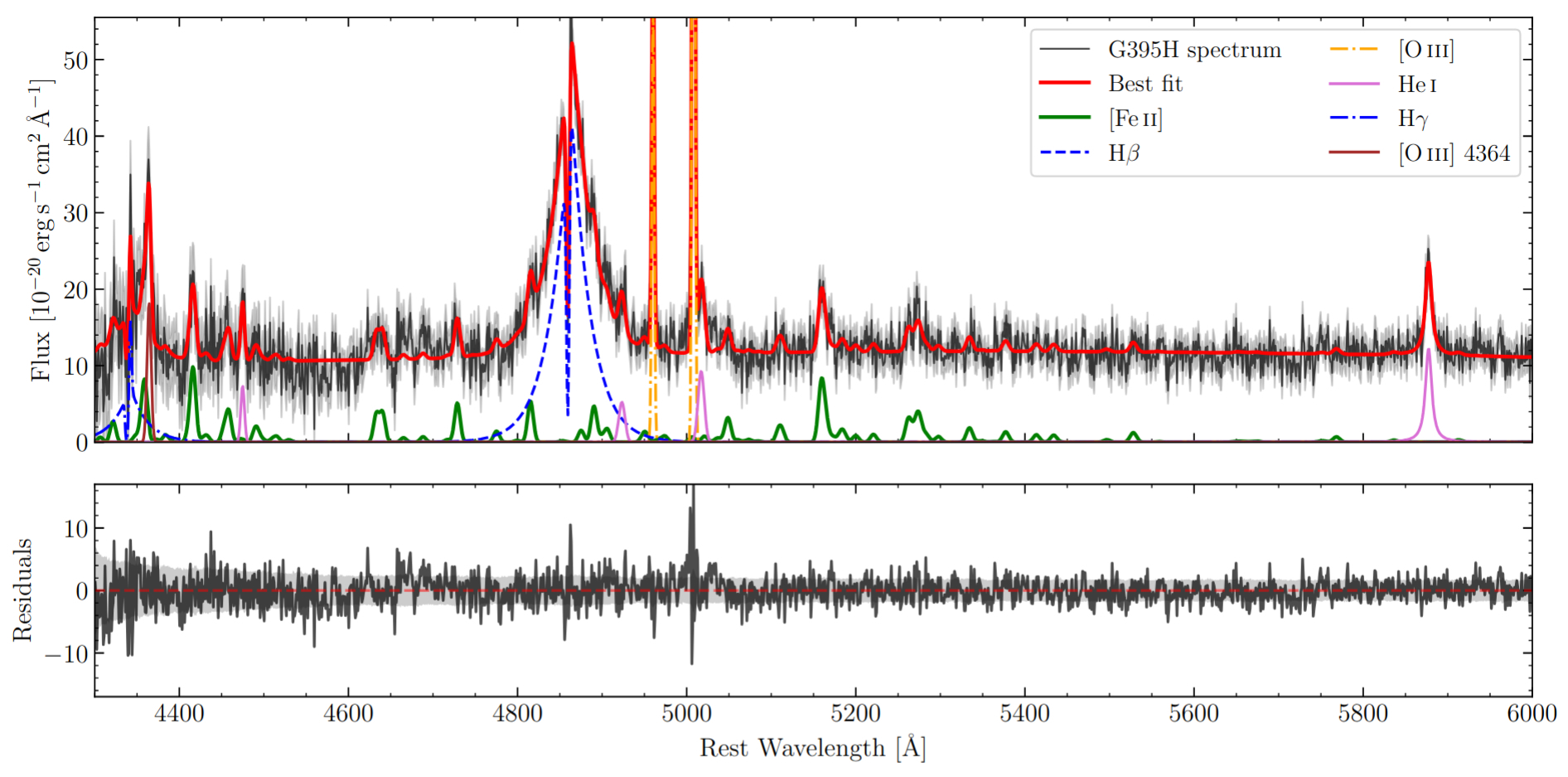
The warm outer layer of a Little Red Dot as the source of [Fe II] and collisional Balmer lines with scattering wings
We investigated the high-resolution rest-frame optical spectrum of GN-9771, a luminous Little Red Dot at z = 5.5, and found a forest of [Fe II] emission lines and multiple He I lines. We discuss that the [Fe II] forest emerges from a warm (~7000 K) outer layer of the dense-gas envelope. In this layer, collisional processes shape the unusual Balmer lines (H-alpha, H-beta etc.), and the strong Balmer break arises.
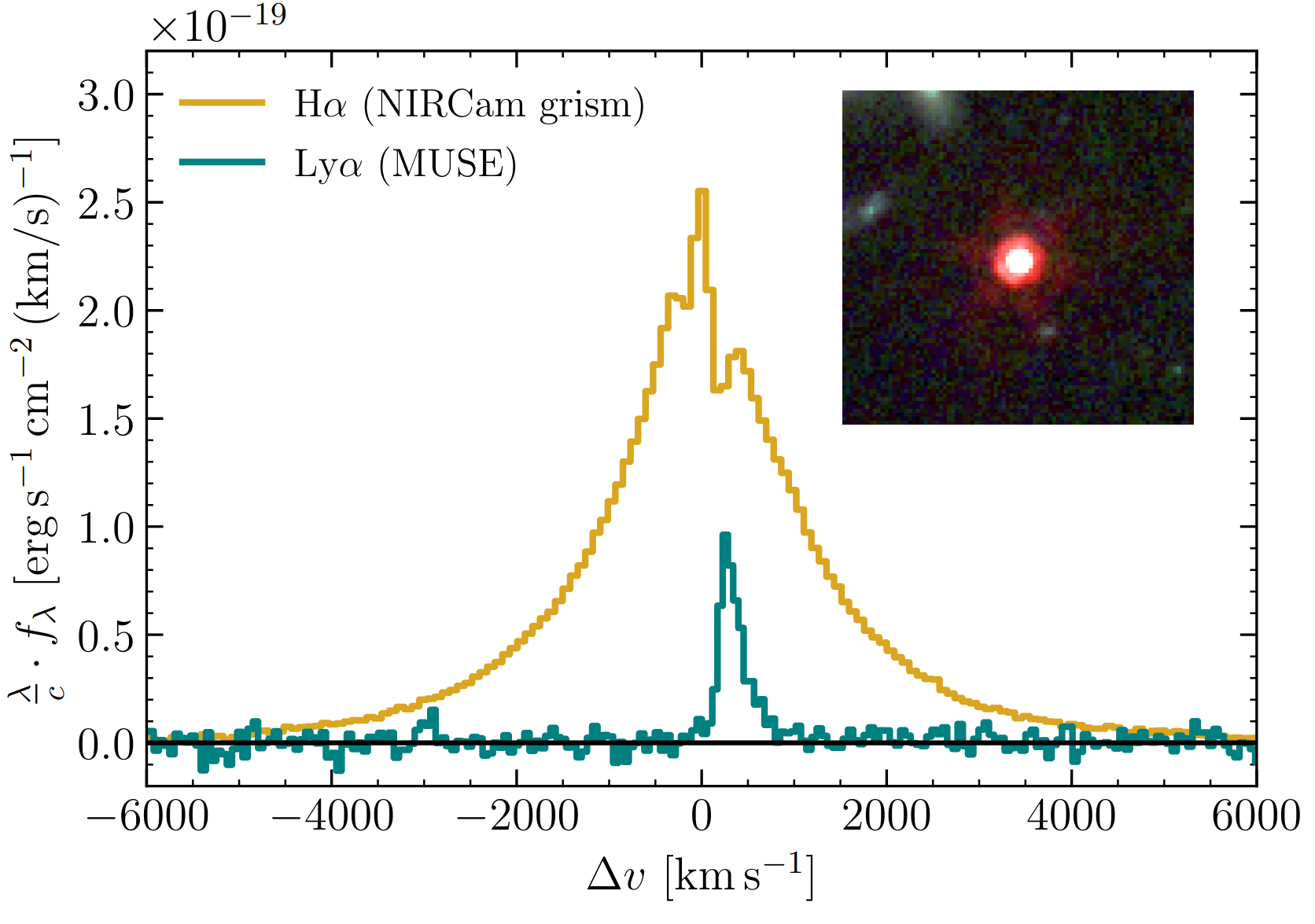
A weak Lyα halo for an extremely bright Little Red Dot. Indications of enshrouded SMBH growth
Using data from the VLT/MUSE spectrometer, we studied the Lyman-alpha extended emission of the most luminous Little Red Dot known to the date of publication: The Monster, at z = 4.46. We found that the Lyman-alpha halo of this object is very weak in comparison to those of quasars with similar H-alpha luminosities. This result suggests that little ionizing radiation is escaping from the LRD’s central engine, which may be enshrouded by a dense-gas envelope with a high covering factor.